

Sauna Choices: A Quick Look
Choosing between a portable sauna and a traditional home sauna is the first big decision. Both offer relaxation and potential health benefits, but they differ significantly in cost, installation, and overall experience. 'Traditional sauna' can encompass wood-fired, electric, or smoke saunas, each with its own character.
Portable saunas are more accessible. They're designed for convenience and ease of use, prioritizing portability over the immersive experience of a fully built sauna. Initial costs are lower, and you avoid construction complexities. However, this convenience often means compromises in size, power, and overall feel.
A basic portable sauna costs around $300, while a fully installed traditional sauna runs into the thousands. Space is another major factor. Traditional saunas demand dedicated square footage, while portable models fold away. Setting realistic expectations from the start helps determine which option best aligns with your needs.
Traditional Saunas: Building a Retreat
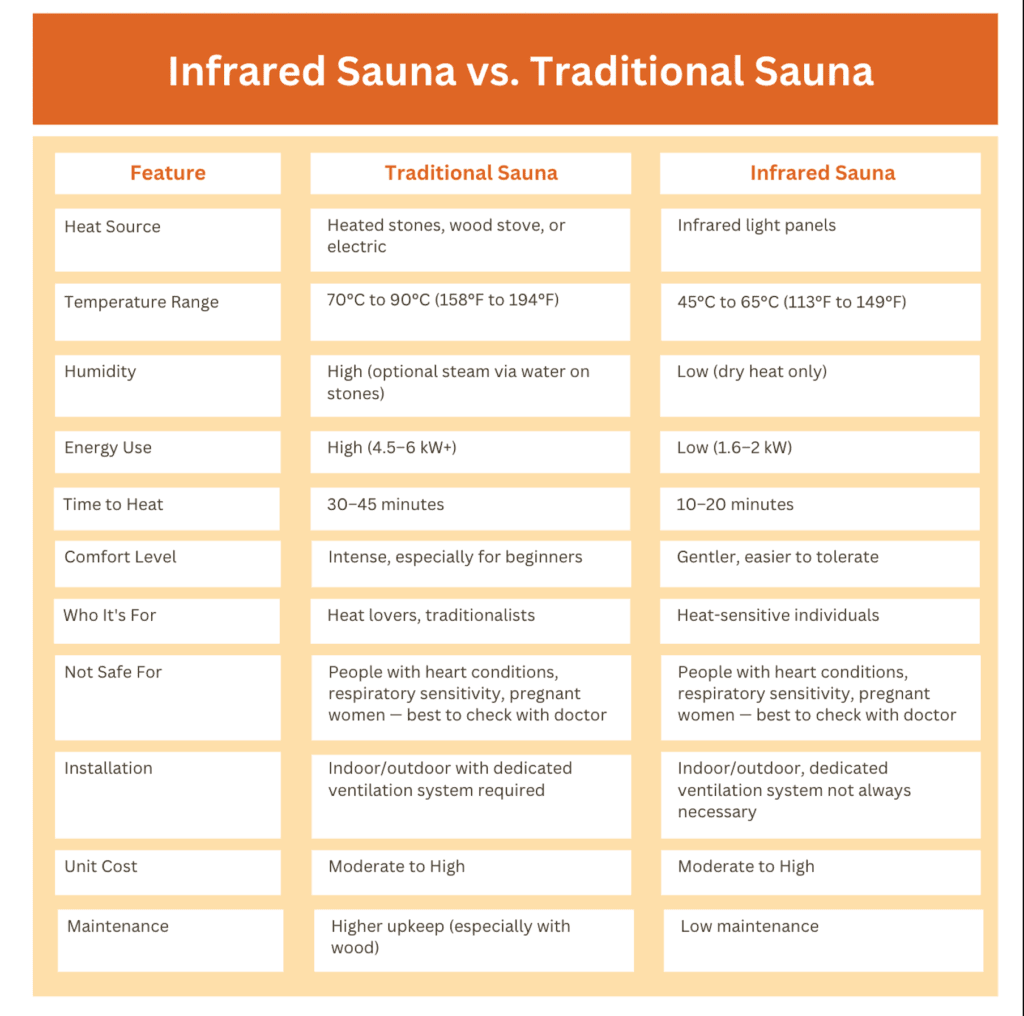
Traditional saunas are what most people picture. They are typically custom-built or purchased as pre-fabricated kits and installed permanently. Heating methods vary: wood-fired saunas offer a classic, intensely hot experience but require a chimney and wood supply. Electric saunas are more convenient with precise temperature control, but lack the rustic charm of wood-fired.
Materials matter. Cedar is popular for its aroma, durability, and moisture resistance. Pine and hemlock are more affordable but may need more maintenance. Building a traditional sauna is a significant undertaking, often requiring carpentry skills, electrical work, and knowledge of building codes.
Permitting is another hurdle. Regulations vary by location, so check with your local building department before construction. access-board.gov provides accessibility guidelines. A properly built traditional sauna is a substantial investment of time, money, and effort, offering a dedicated space for relaxation and wellness that can last for decades.
Ventilation is crucial. access-board.gov and sauna manufacturers emphasize adequate airflow for safety and to prevent moisture buildup. Poor ventilation makes a sauna uncomfortable and potentially hazardous.
Portable Saunas: Convenience and Compromises
Portable saunas have grown in popularity, offering a convenient and affordable way to experience sauna therapy. Varieties include inflatable, folding, and tent-style saunas. Inflatable models are most compact but may feel less sturdy. Folding saunas offer more structure, while tent-style saunas often provide the largest interior space.
Heating methods vary. Many portable saunas use electric heaters, which are safe and easy to operate. Infrared heaters are increasingly common. Newer models offer more consistent and effective heat distribution than earlier iterations. The heating element's quality is key to performance.
Setup time is a major selling point, with most portable saunas set up in under an hour, some inflating in minutes. Portability is another benefit—take them camping, to a friend’s house, or use them temporarily. However, portable saunas are generally smaller than traditional ones, heat-up time can be longer, and they are less well-insulated, losing heat more quickly.
Cost Breakdown: Initial Investment & Running Expenses
The initial cost of a portable sauna typically ranges from $300 to $1,500, depending on size, features, and heating method. Higher-end models with infrared heaters are pricier. Traditional saunas represent a much larger investment, with pre-fabricated kits costing $3,000 to $8,000, and fully custom-built saunas exceeding $10,000.
Upfront cost is only part of the equation; ongoing expenses matter. Electric saunas add to electricity bills, while wood-fired saunas require firewood. Traditional saunas need occasional cleaning, wood treatment, and potential repairs. Portable saunas generally require less maintenance, though heating elements may need replacement.
Here's a rough cost comparison:
| Sauna Type | Initial Cost | Annual Running Cost (Estimate) | Maintenance |
|-------------------|--------------|--------------------------------|-------------|
| Portable (Electric) | $300 - $1,500 | $100 - $300 | Low |
| Traditional (Electric) | $3,000 - $8,000 | $300 - $600 | Medium |
| Traditional (Wood) | $4,000 - $10,000+ | $200 - $500 (wood cost) | Medium-High |
Portable Sauna vs. Traditional Home Sauna: A Comparative Overview (2026)
| Feature | Portable Sauna | Traditional Home Sauna |
|---|---|---|
| Initial Purchase Cost | Low to Medium | Medium to High |
| Installation Complexity | Very Low | High |
| Space Requirements | Low | High |
| Electricity/Fuel Costs | Medium | Medium to High |
| Maintenance Effort | Low | Medium |
| Portability | High | None |
| Heating Time | Fast | Slow to Moderate |
| Customization Options | Limited | Extensive |
Illustrative comparison based on the article research brief. Verify current pricing, limits, and product details in the official docs before relying on it.
Space & Installation: What Does Your Home Allow?
Space is critical. Traditional saunas require a dedicated area, typically at least 6x8 feet for a small, two-person model. Home structure modification may be needed, including floor reinforcement and electrical wiring. Professional installation is often recommended, adding to the cost. Permits for structural changes are common.
Portable saunas are more flexible. Set them up indoors or outdoors on a level surface with power access. They don’t require permanent installation, ideal for renters or those with limited space. Ensure adequate ventilation, as highlighted by access-board.gov, especially when using indoors.
Regardless of the type of sauna you choose, ventilation is paramount. Proper airflow prevents moisture buildup, ensures safety, and improves the overall sauna experience. Consider the placement of vents and fans to maximize airflow. If you're unsure about ventilation requirements, consult with a building professional.
Health Benefits: Are They the Same?
The health benefits of sauna use are well-documented. Studies have shown that regular sauna sessions can improve cardiovascular health, reduce muscle soreness, relieve stress, and boost the immune system. But do you get the same benefits from a portable sauna as a traditional one? The answer is…it’s complicated. Traditional saunas typically reach higher temperatures than portable saunas, which may lead to a more intense physiological response.
However, the type of heat also matters. Traditional saunas use convection heat, which warms the air around you. Infrared saunas, commonly found in portable models, use infrared radiation to penetrate deeper into the tissues. Some research suggests that infrared saunas may offer unique benefits, such as improved circulation and pain relief. I'm not a medical professional, so
The key is consistency. Regardless of which type of sauna you choose, regular use is essential to experience the health benefits. According to Amazon.com, portable saunas are increasingly popular among athletes for post-workout recovery, suggesting a growing awareness of their potential benefits. Ultimately, the best sauna for your health is the one you’ll actually use.
- Cardiovascular Health: Improved blood flow and lower blood pressure.
- Muscle Recovery: Reduced muscle soreness and inflammation.
- Stress Reduction: Relaxation and reduced cortisol levels.
- Immune System Boost: Increased white blood cell production.
Featured Products

Infrared heating technology · Includes heated foot pad and folding chair · Remote control for convenience
This option provides a complete infrared sauna experience with included seating and a heated foot pad for enhanced comfort and relaxation.

3L capacity steam generator · 1200W power output · Adjustable steam levels and timer
This portable steamer is an excellent choice for those who prefer steam saunas, offering adjustable settings and a generous timer for a personalized experience.

Low EMF carbon fiber infrared heating · 9 temperature levels · Waterproof interior and included carry bag
The RejuvaWrap offers a high-tech infrared sauna experience in a blanket form, featuring precise temperature control and a durable, waterproof design for easy cleaning and portability.

Spacious interior for one person · Designed for relaxation and detox therapy · Steamer not included, allowing for customization
This full-size tent provides a dedicated space for a personal sauna session and is ideal for users who already own a steamer or plan to purchase one separately.
As an Amazon Associate I earn from qualifying purchases. Prices may vary.
2026 Trends: What's Changing in Sauna Tech?
Looking ahead to 2026, I expect to see several key trends in sauna technology. Portable sauna designs will likely become more sophisticated, with improved insulation, more efficient heating elements, and smart features like app control and pre-programmed heat cycles. We’re already seeing some models with built-in Bluetooth speakers and aromatherapy diffusers.
Hybrid saunas, combining traditional and infrared heating, are also gaining popularity. These offer the best of both worlds – the intense heat of a traditional sauna and the deep tissue penetration of infrared. Personalization will be another major trend. Saunas may be equipped with sensors that monitor your body temperature and adjust the heat accordingly.
I also anticipate advancements in materials science. New, more sustainable and durable materials may be used in both portable and traditional saunas. It’s possible we’ll see more compact, energy-efficient designs that minimize environmental impact. The integration of virtual reality (VR) for immersive relaxation experiences isn’t out of the question either, though that feels a bit further off.
Making the Decision: A Personal Fit
So, which sauna is right for you? There’s no one-size-fits-all answer. It depends on your budget, space, health goals, and lifestyle. If you have limited space and a tight budget, a portable sauna is a great option. If you’re looking for a dedicated relaxation space and are willing to invest the time and money, a traditional sauna may be a better fit.
Consider these questions:
Here's a quick checklist to help you decide:
* Budget: How much are you willing to spend?
* Space: How much space do you have available?
* Installation: Are you comfortable with DIY projects, or will you need professional help?
* Health Goals: What are you hoping to achieve with sauna use?
* Lifestyle: How often will you use the sauna, and where will you use it?
Ultimately, the best sauna is the one that you’ll enjoy and use regularly. Weigh the pros and cons of each option carefully, and choose the one that best aligns with your individual needs and preferences.



No comments yet. Be the first to share your thoughts!